
Dr. John Gold: balanced fuel for dogs that actually move
Gold is the range many owners land on when Silver feels thin for weekend mileage but Titanium feels excessive for a dog that still naps like it is paid to. Think active companion rather than professional athlete.
Find Gold listings
Active-adult Dr John SKUs buyers cross-shop with Gold
Gold is the energetic middle ground—these listings are the usual comparisons on the same shelf.
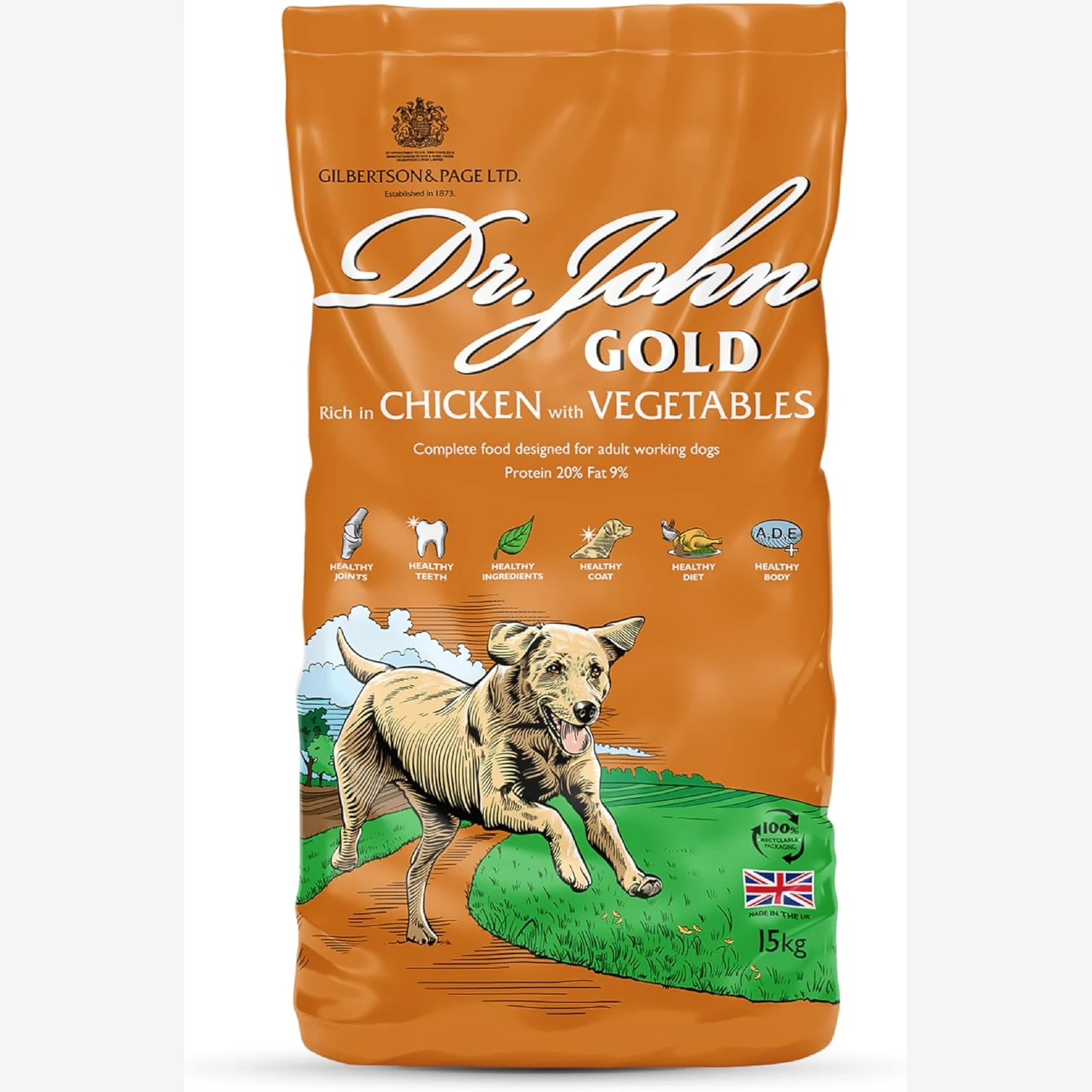
Dr John Gold, chicken with vegetables (15 kg)
Higher-output chicken recipe aimed at sporting adults when weekend mileage outgrows bare maintenance.
Check price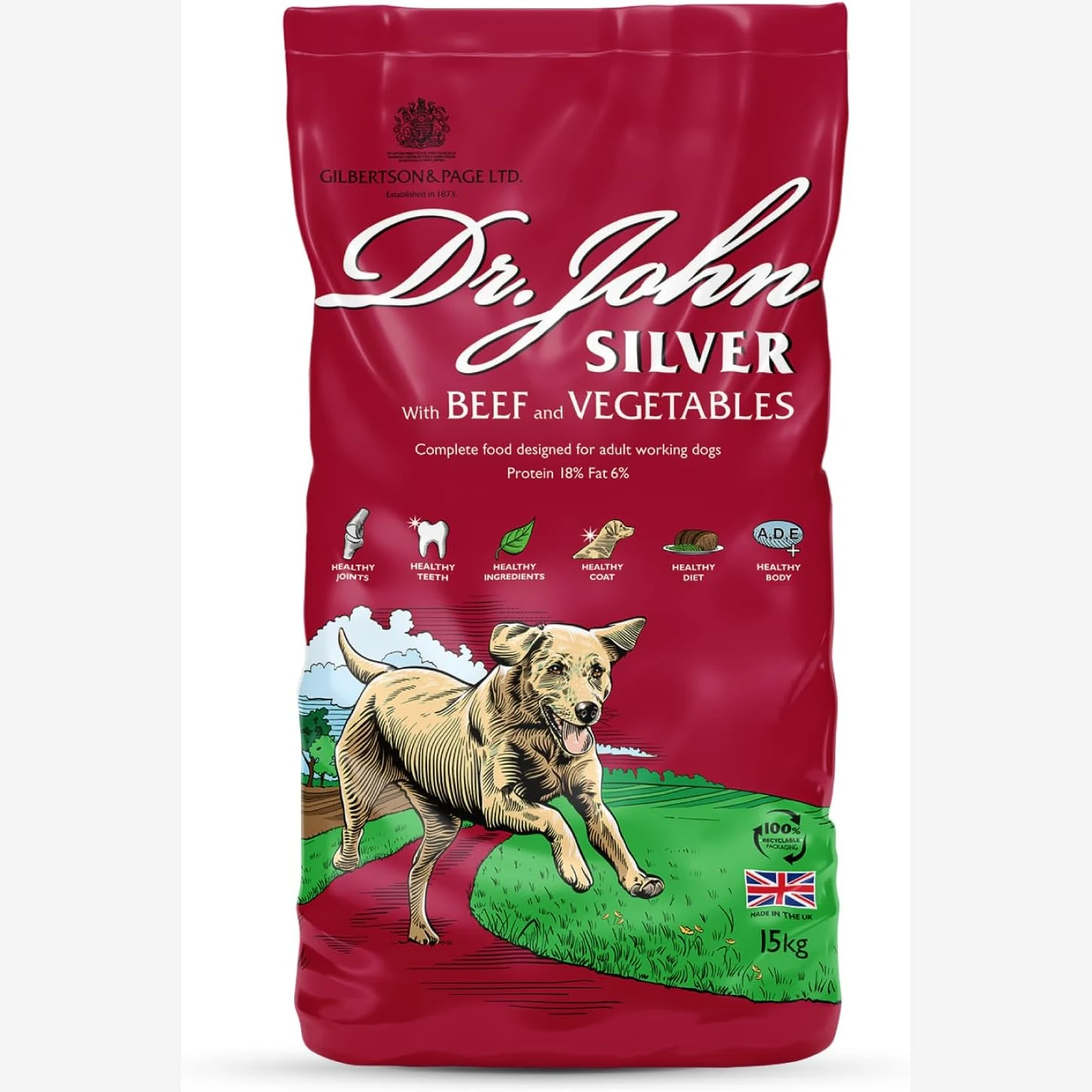
Dr John Silver, beef with vegetables (15 kg)
Silver stays the honest downgrade when rest days multiply but you want to stay inside the same brand family.
Check price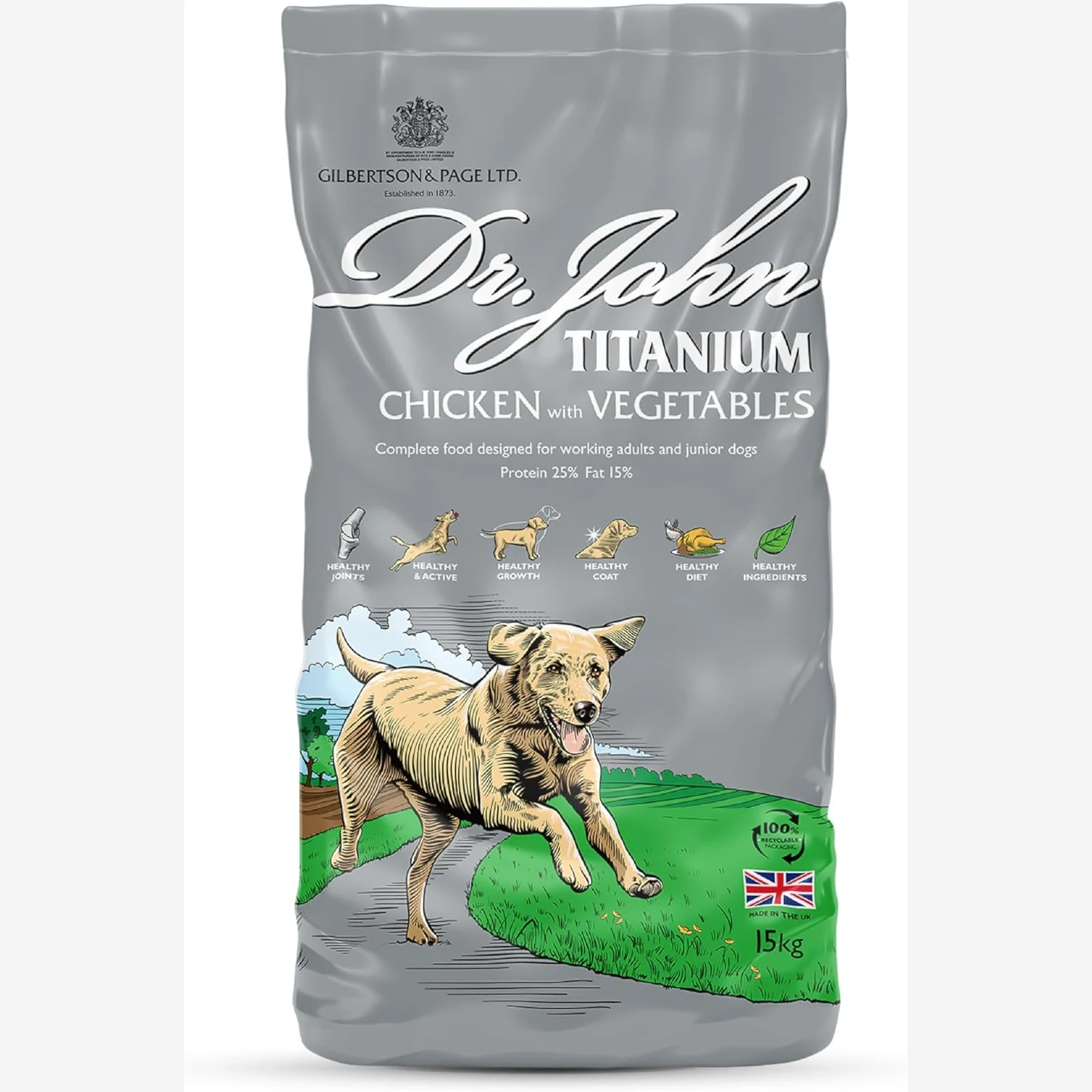
Dr John Titanium, chicken with vegetables (15 kg)
Titanium is the denser follow-on when weighed Gold portions still leave ribs too easy to spot mid-season.
Check price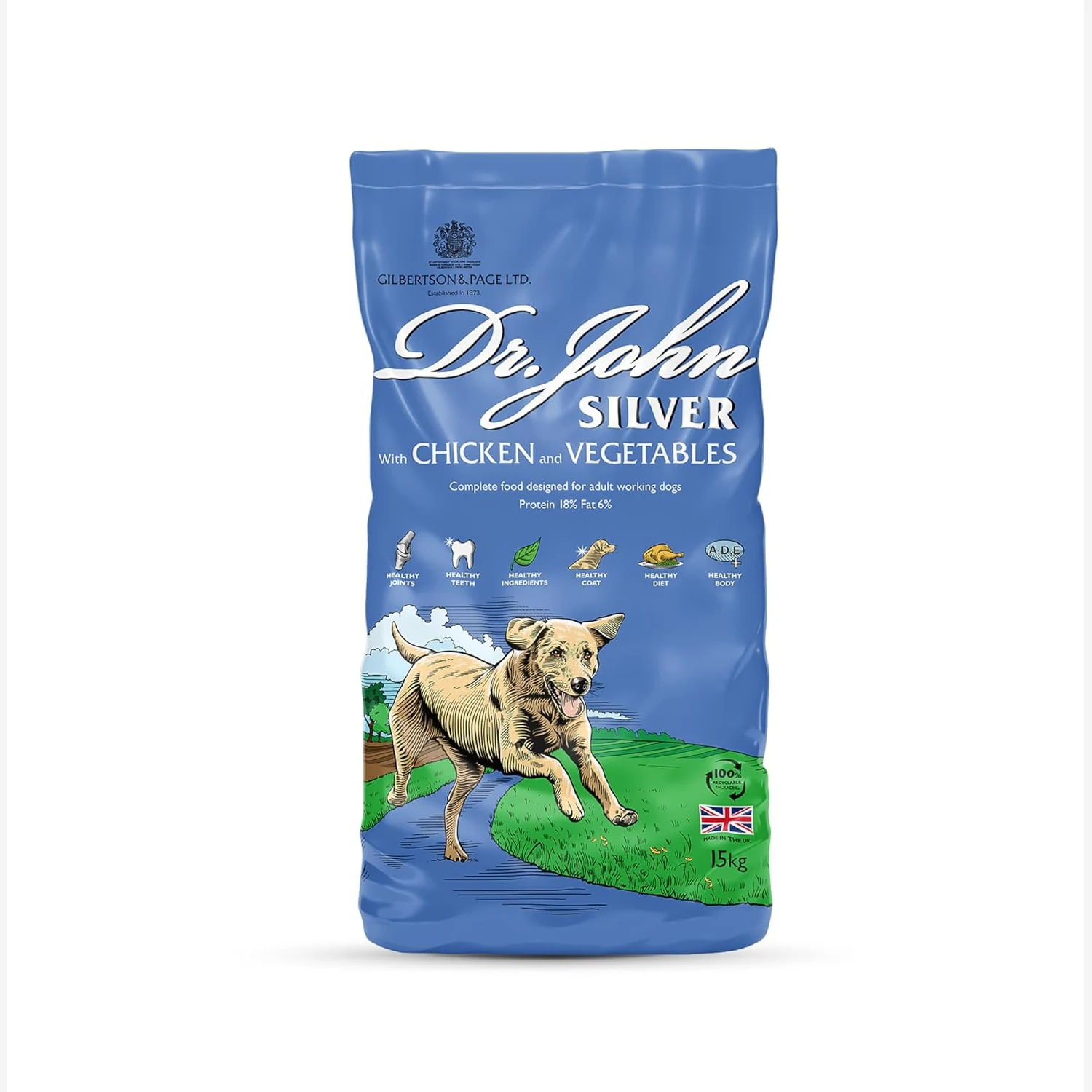
Dr John Silver, chicken with vegetables (15 kg)
Chicken-led maintenance helps when you want a poultry base without jumping straight to Titanium density.
Check priceThe decision map: Gold versus Silver in real life
Start with body condition and output. If ribs stay elusive on weighed Silver portions during moderate work, Gold may carry energy more politely than simply heaping extra maintenance kibble. If your dog gains waistline on Gold at guide grams, you are not failing the brand—you are proving your dog is not as busy as the statistical dog on the chart.
Seasonality matters. A spring dog that trims up naturally may need fewer grams than the same dog in autumn when days shorten and hedgerow snacks appear. Adjust grams before you swap lines.
Protein, fat, and the story the numbers tell
Marketing loves adjectives; bags still publish analytical constituents. Compare crude protein and crude fat across lines, then translate into calories your kitchen scales understand. Higher fat often means smaller meals for the same energy—useful for dogs that bloat if bowls look skimpy psychologically.
Our ingredients primer walks through meat meals, ash, and fibre without mysticism. If you cannot yet decode the label, spend ten minutes there before debating chicken versus beef in a Facebook thread.
Working patterns: honest mileage checks
Gun dog teams, hiking companions, and farm helpers often converge on Gold when weekday rest balances weekend effort. If your diary is genuinely six long days weekly, consider whether Titanium is the cleaner match. The wrong diagnosis is “always Gold” because the colour looks friendly on the sack.
Heat stress changes everything. Dogs that work hard in summer may eat less despite expenditure; forcing the bowl teaches nothing. Cold, wet weeks often increase calorie need through shivering and tougher terrain.
Transitions that do not sabotage your data
Blend across seven to ten days. Keep treats boring during the switch. If stools wobble, pause the ratio change for a few days. Sudden jumps invite diarrhoea that gets misattributed to “rich Gold” when rate of change was the real villain.
Sensitivity, chicken, beef, and structured trials
If history suggests dietary sensitivity, coordinate with your vet before rotating proteins weekly. For some dogs, lamb and rice remains the clearer trial; for others, grain-free is more logical. Gold is not a medical diet by default.
Puppies, seniors, and life-stage honesty
Puppies belong in puppy-appropriate nutrition until your vet agrees otherwise. Seniors with quiet lives may thrive on maintenance lines with tight portion control; seniors with undiagnosed disease need clinics, not guesswork.
Money, multi-dog homes, and fair comparisons
Dr. John's Dog Food often wins on pence-per-day maths in multi-dog homes. Compare cost per kilogram and energy density, not sack colour. If you run three spaniels, small systematic savings fund vaccinations faster than coupon drama.
See Dr. John vs Skinners for competitive framing without tribal warfare, and reviews for recurring owner themes.
Behaviour, training, and the calorie ledger
High-drive dogs train often. Reward frequency can outpace your memory. Pre-portion training jars from the daily allowance so enthusiasm does not silently double intake. If your dog gains condition while “following the guide,” the guide is not the only input.
When to escalate clinically
Repeated vomiting, weight loss despite appetite, dark stools, or sudden collapse are not brand debates. Call your veterinary surgery. Bring the food bag photo and lot code; it speeds conversations.
Storage, rancidity, and summer sheds
Fat oxidises in hot metal sheds. Close sacks, keep food off damp concrete, and finish open bags within the manufacturer window. Rancid fat tastes “off” to dogs before humans notice—refusal is sometimes chemistry, not fussiness.
Coat, stools, and the slow verdict
Coat shine lags behind dietary changes; give honest trials eight to twelve weeks before declaring victory or failure unless acute signs appear. Stools should be predictable in timing and form on stable portions; intermittent chaos often traces to scavenging, not mysterious “protein intolerance.” Keep a one-line diary: grams fed, treats, exercise, stool quality. Patterns become obvious fast.
If you rotate toppers constantly, you lose the ability to interpret the base food fairly. Pick a boring fortnight if you truly need data.
Travel, trials, and consistency
Competition weekends upset routines. Pack pre-weighed meals, offer water before runs, and resist the post-trial pub chip pity party that rewires calories. Dogs care about predictability more than culinary novelty.
If you board your dog, write feeding instructions in grams, not “two cups,” because cups lie and staff rotate. A laminated card in the kit beats a hurried phone call.
Weigh the dog, not just the food—monthly checks catch drift early.
If muscle tone drops while weight stays stable, revisit exercise and clinical pain before you chase higher protein.
Disclaimer: educational only; individual animals vary. Seek veterinary advice for medical concerns.