
Dr. John Titanium: when the diary earns denser calories
Titanium is the line owners mention when dogs work long days, train hard, or live outdoors through cold months. Marketing language varies; the practical idea is higher protein and fat packaged so active dogs recover without eating unrealistic bowl volumes.
Find Titanium listings
High-output Dr John listings next to Titanium
Dense calories should sit beside lighter options you might return to when work drops—these are the common pairings.
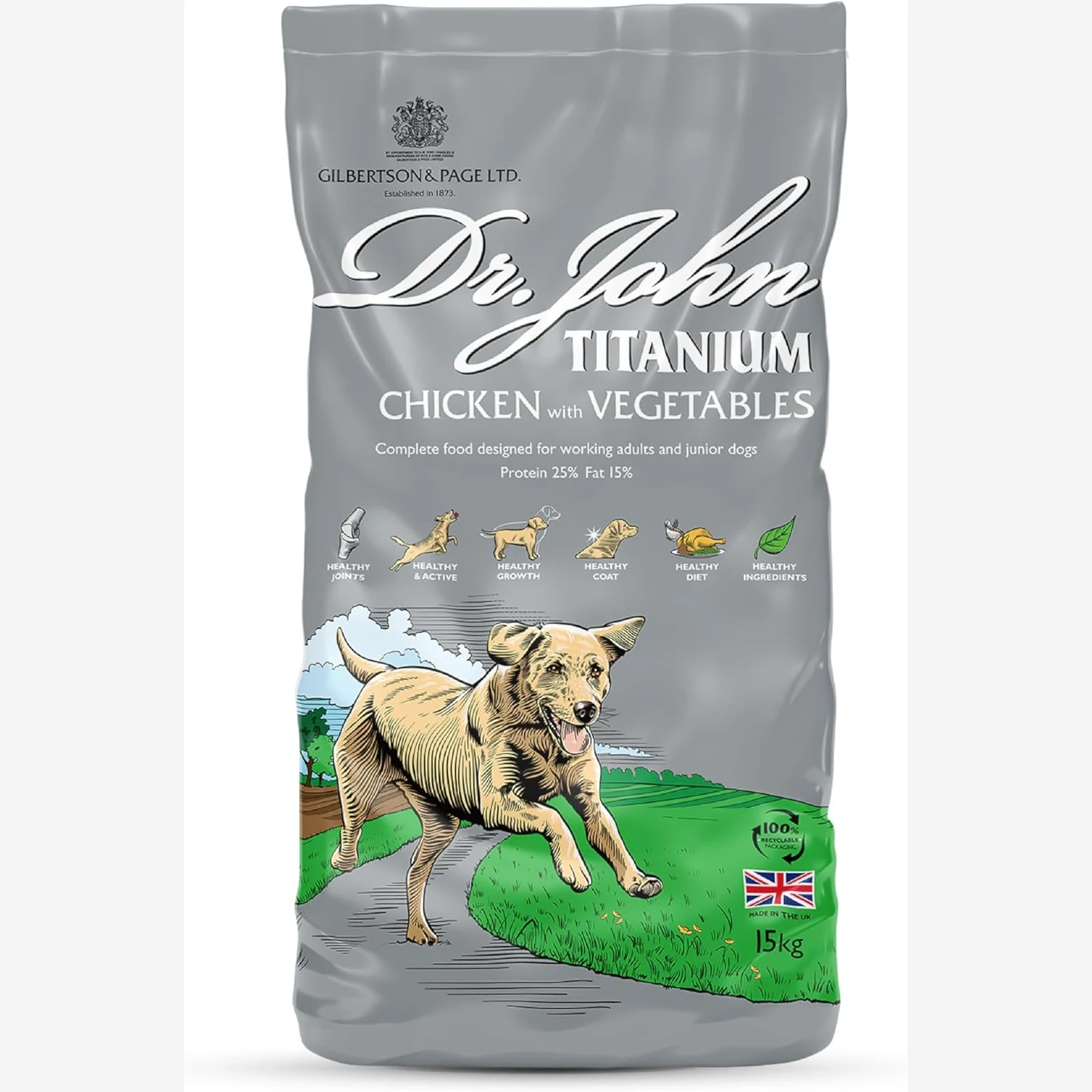
Dr John Titanium, chicken with vegetables (15 kg)
The flagship high-protein sack active handlers mention for cold weather and long field days.
Check price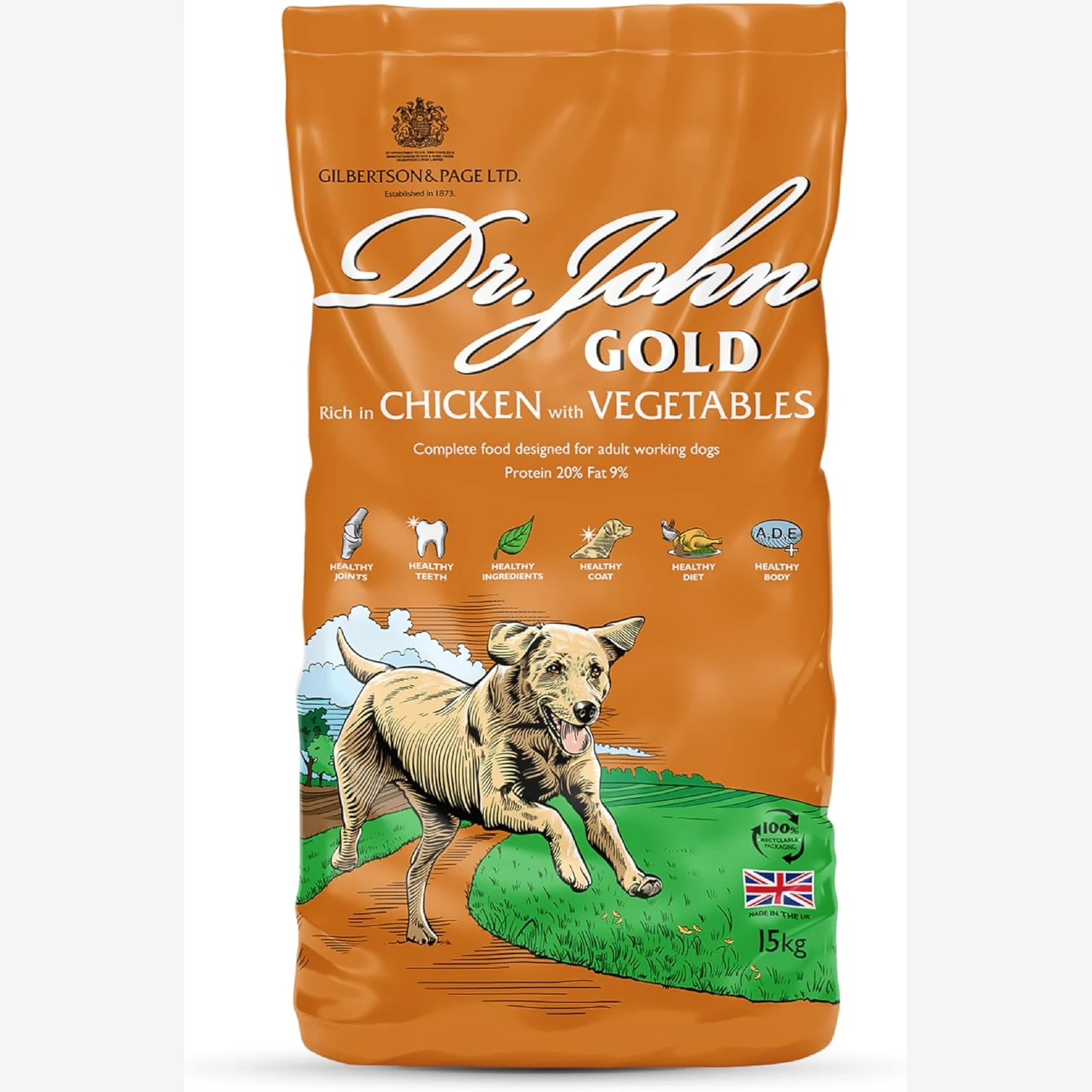
Dr John Gold, chicken with vegetables (15 kg)
Gold is the intermediate stop when Titanium leaves waistlines too generous after a quiet month.
Check price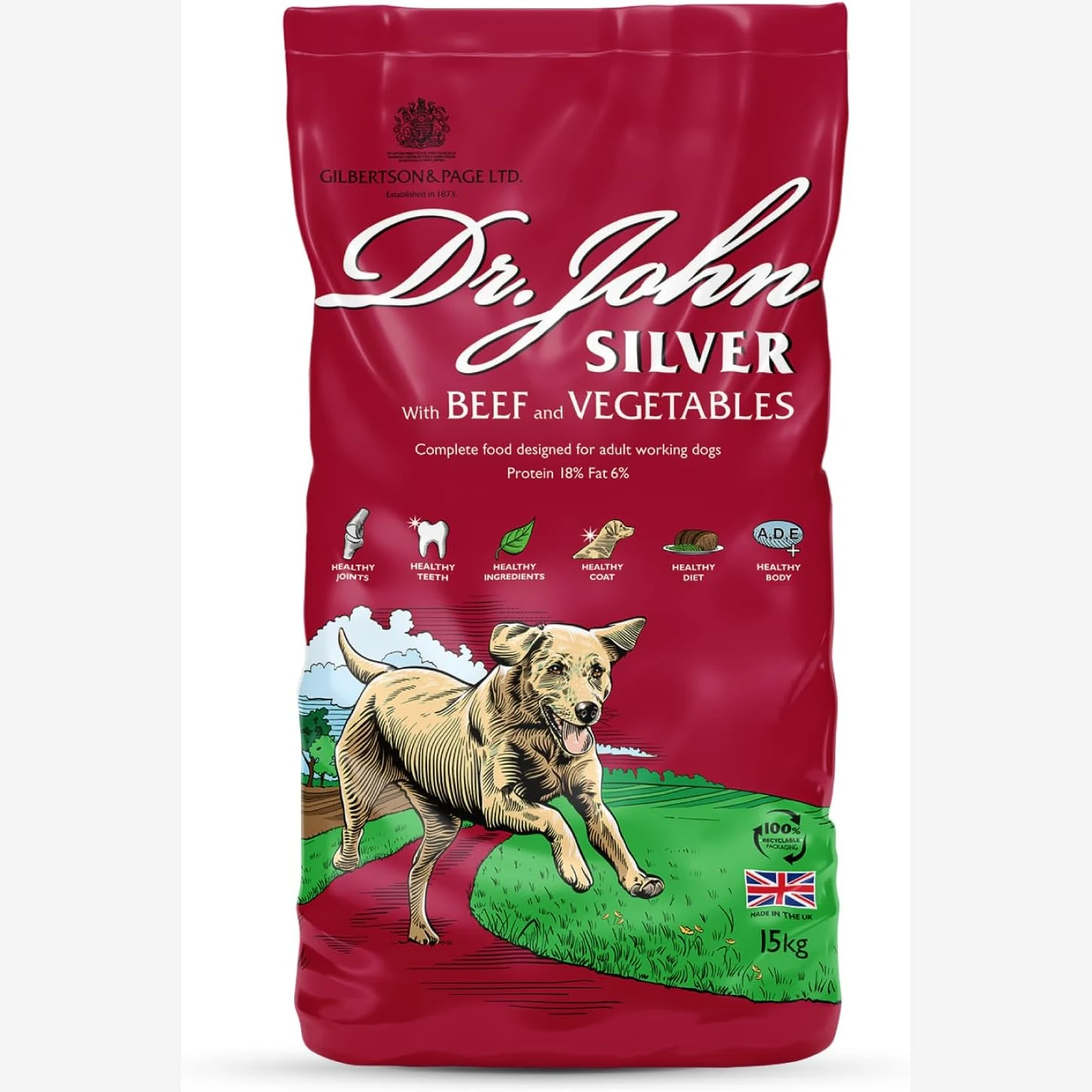
Dr John Silver, beef with vegetables (15 kg)
Silver is the maintenance anchor if you split seasons between flat-out work and genuine sofa time.
Check price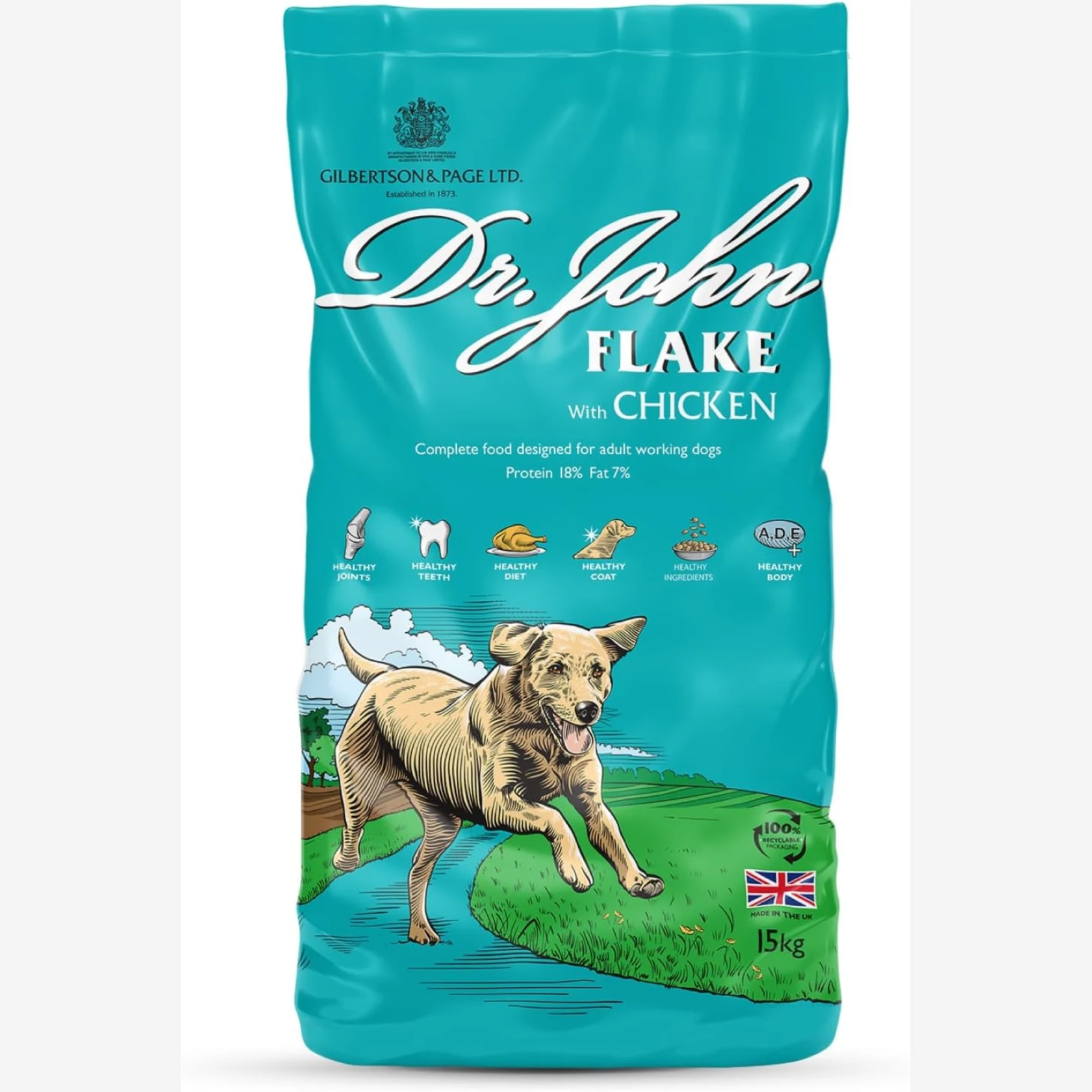
Dr John Flake with chicken (15 kg)
Flake suits the lightest diary in the range when you still want Dr John economics without Titanium richness.
Check priceThe ~27% protein ballpark: useful, not sacred
Owners often cite figures around 27% crude protein for Titanium-style diets. Treat that as orientation when comparing bags, not a laboratory guarantee batch to batch. Manufacturers adjust within regulatory and nutritional constraints; always read the panel on the sack you hold.
Protein supports tissue repair; fat carries calories for endurance. Together they define how much kibble equals how much fuel. Our ingredients primer explains why “high protein” alone does not diagnose quality.
Who genuinely needs Titanium
Think sustained workload: beating multiple days weekly, long moorland days, sled or rig sports, farm chores with genuine mileage, or kennel populations where individuals stay lean only on dense feeds. If your dog’s hardest week is two lead walks and a Saturday park romp, Gold or Silver may already fit.
Puppies are not default Titanium candidates; growth has its own rules—see puppy guidance.
The obesity trap on “working dog” bags
Dense food plus sofa life equals weight gain that stresses joints. If your dog’s workload drops—injury, heatwave, family crisis—reduce grams immediately. The bag does not know your calendar.
Weigh food. Re-weigh the dog monthly. Waistlines lie less than pride.
Transitioning up in energy without digestive drama
Move gradually across seven to ten days, sometimes longer for sensitive dogs. Sudden jumps to richer diets invite loose stools that get misread as “intolerance.” Pause ratio changes if output turns watery; stability matters more than speed.
Hydration, heat, and the invisible tax
Hard work increases water turnover. Carry water, shade dogs between jobs, and recognise that panting is not a feeding cue. Post-exercise gorging plus deep chested breeds is a known risk pattern—rest before massive meals.
Seasonal swings: winter fuel, summer sense
Cold wet days burn calories through shivering and tougher ground. Mid-summer may reduce appetite despite work; forcing the bowl teaches nothing. Adjust grams to observed condition, not guilt.
Sensitivity and alternative bases
If poultry or grains suspect, structured veterinary trials beat guesswork. Some dogs pivot to lamb and rice; others to grain-free options. Titanium is not automatically the right protein for every dog simply because the label looks “serious.”
Competitive framing and owner chatter
Compare Titanium analytically against rival working lines, including discussions in Dr. John vs Skinners. For anecdotal clustering, see reviews—useful for questions to ask, not for diagnoses.
Muscle, recovery, and the non-food layer
Food supports recovery; it does not replace sleep, sensible training progression, or veterinary care when lameness persists. If your dog is intermittently sore, stop heroically increasing calories and start investigating cause.
Storage and fat stability
Higher fat means higher rancidity risk in hot storage. Keep sacks sealed, cool, and dry. Finish open bags within guidance. Rancid fat can trigger refusal or gut upset—sometimes the dog is the quality control department.
When to phone the vet
Repeated vomiting, bloated abdomen, collapse, dark stools, or severe lethargy after meals are emergencies or urgencies—not brand tweaks. Call your veterinary surgeon.
Honest logging beats brand loyalty
Note grams, treats, workload, and weight weekly during transitions. Spreadsheets are free; regret is not.
Kennel maths: consistency at scale
If you run multiple dogs, colour-code buckets, label grams per dog, and train everyone on the same scoop language. “About half” is how thin dogs stay thin and heavy dogs stay heavy in the same yard. Post the feeding sheet at eye level; verbal handovers fail when people rotate.
Competition between dogs at feed time is a management problem. Feed separately, remove bowls, and never free-choice dense diets in mixed groups unless you enjoy veterinary emergencies.
Travel days and missed meals
Working trips skew schedules. If a meal is late, do not double the next one automatically—offer water, rest, then a normal portion. Dogs tolerate sensible gaps better than owners tolerate guilt.
Air travel and long ferry legs have their own hydration rules; food timing should follow professional transport guidance, not forum swagger.
Condition scoring: teach your hands to tell the truth
Run ribs, lumbar tuck, and abdominal waist weekly on the same schedule. Photos help when coats thicken in winter and hide sneaky weight. If you cannot feel ribs without digging, you are not “bulking” a working dog—you are borrowing joint problems from the future.
Muscle matters as much as fat: thighs should feel firm on dogs doing real work. If performance drops while appetite stays high, pain and metabolic issues belong on the differential—not another scoop by reflex.
Weigh kibble weekly for a month during seasonal changes; your memory of “what worked last winter” is usually approximate.
Note: working-dog feeding has legal and welfare context—comply with animal welfare law and professional guidance.