
Dr. John Silver: steady adult maintenance for everyday dogs
Most dogs spend most weeks doing ordinary things: walks, sofa shifts, and the occasional mad five minutes in the garden. Silver sits in the sensible middle—complete nutrition without pretending every pet is running a fell race each morning.
Find Silver listings
Maintenance and step-up bags that pair with Silver
Silver sits in the sensible middle—these SKUs are the usual upgrades or sideways moves owners mention beside it.
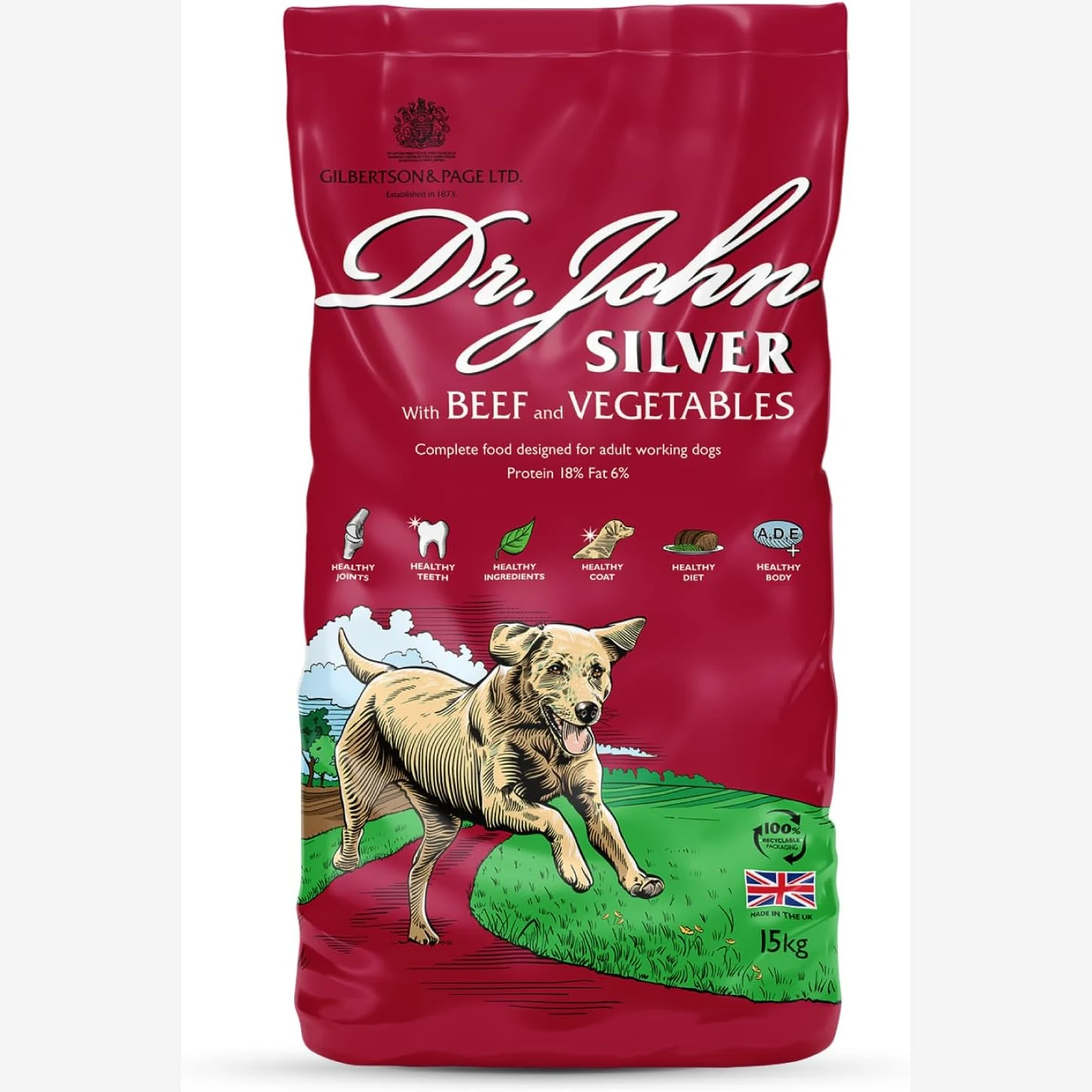
Dr John Silver, beef with vegetables (15 kg)
The beef-forward maintenance sack most buyers mean when they say “Silver” off the shelf.
Check price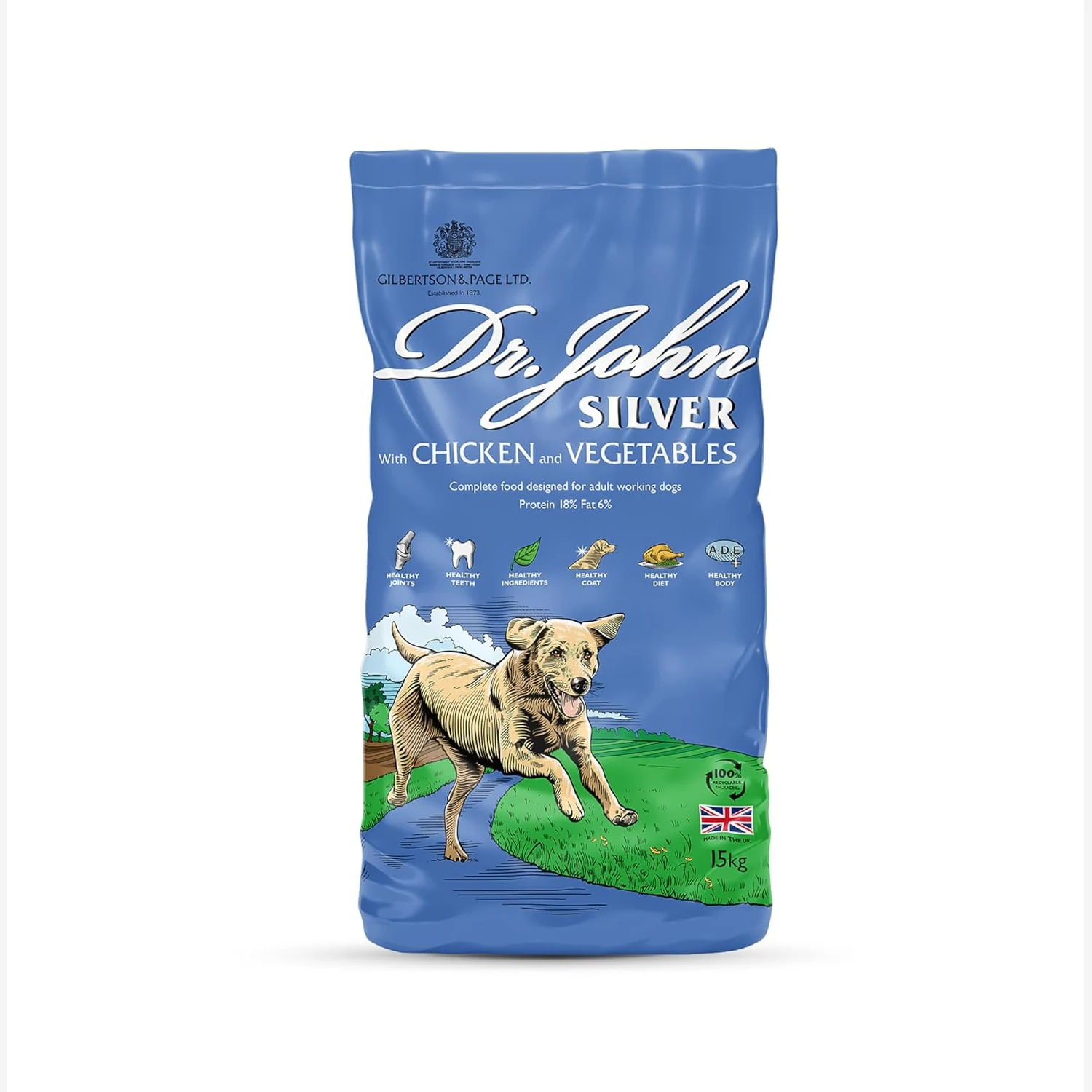
Dr John Silver, chicken with vegetables (15 kg)
Chicken Silver gives you the same maintenance tier with poultry if beef is not the dog’s favourite flavour.
Check price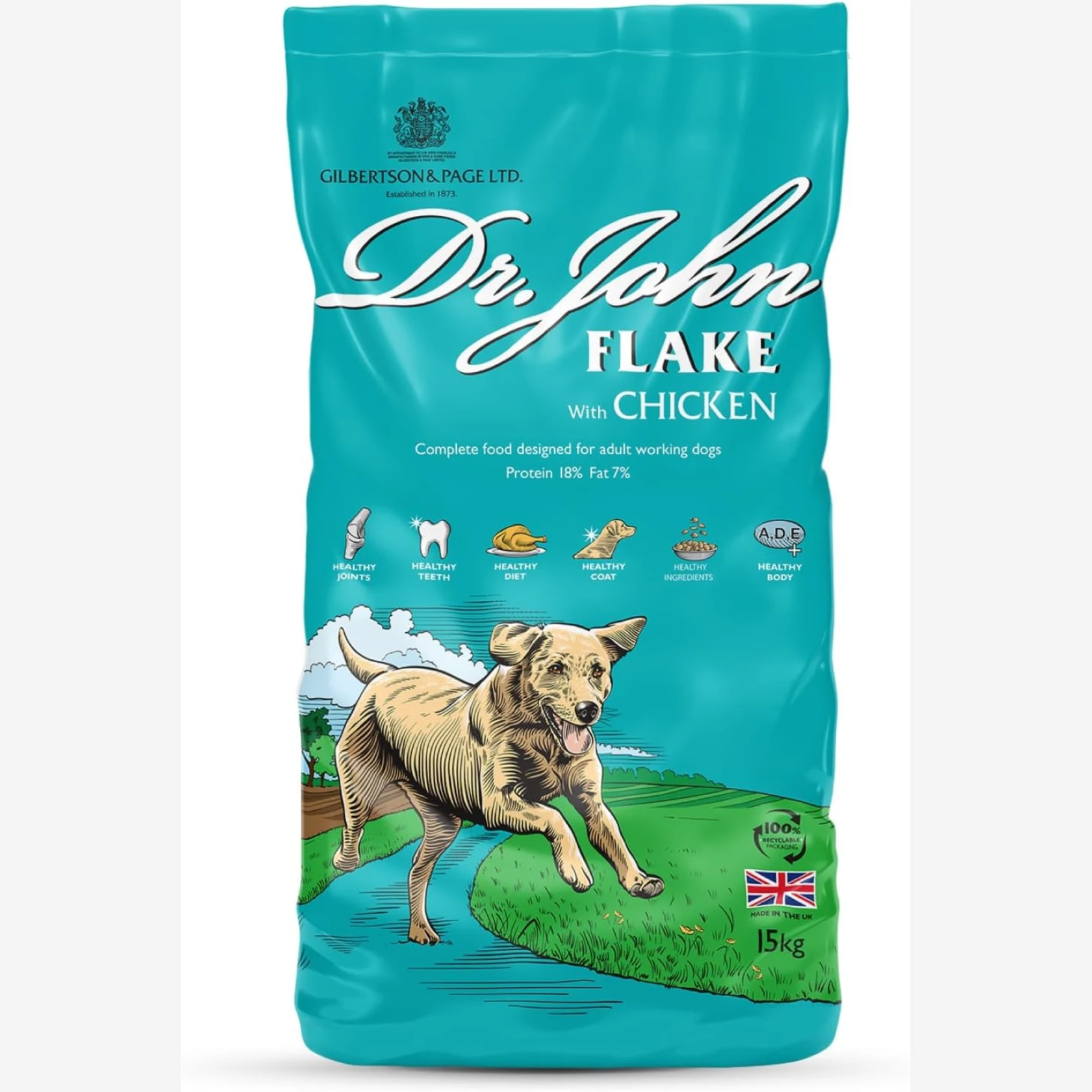
Dr John Flake with chicken (15 kg)
Flake-branded complete chicken remains a lighter-activity classic that often sits beside Silver in budget working-dog conversations.
Check price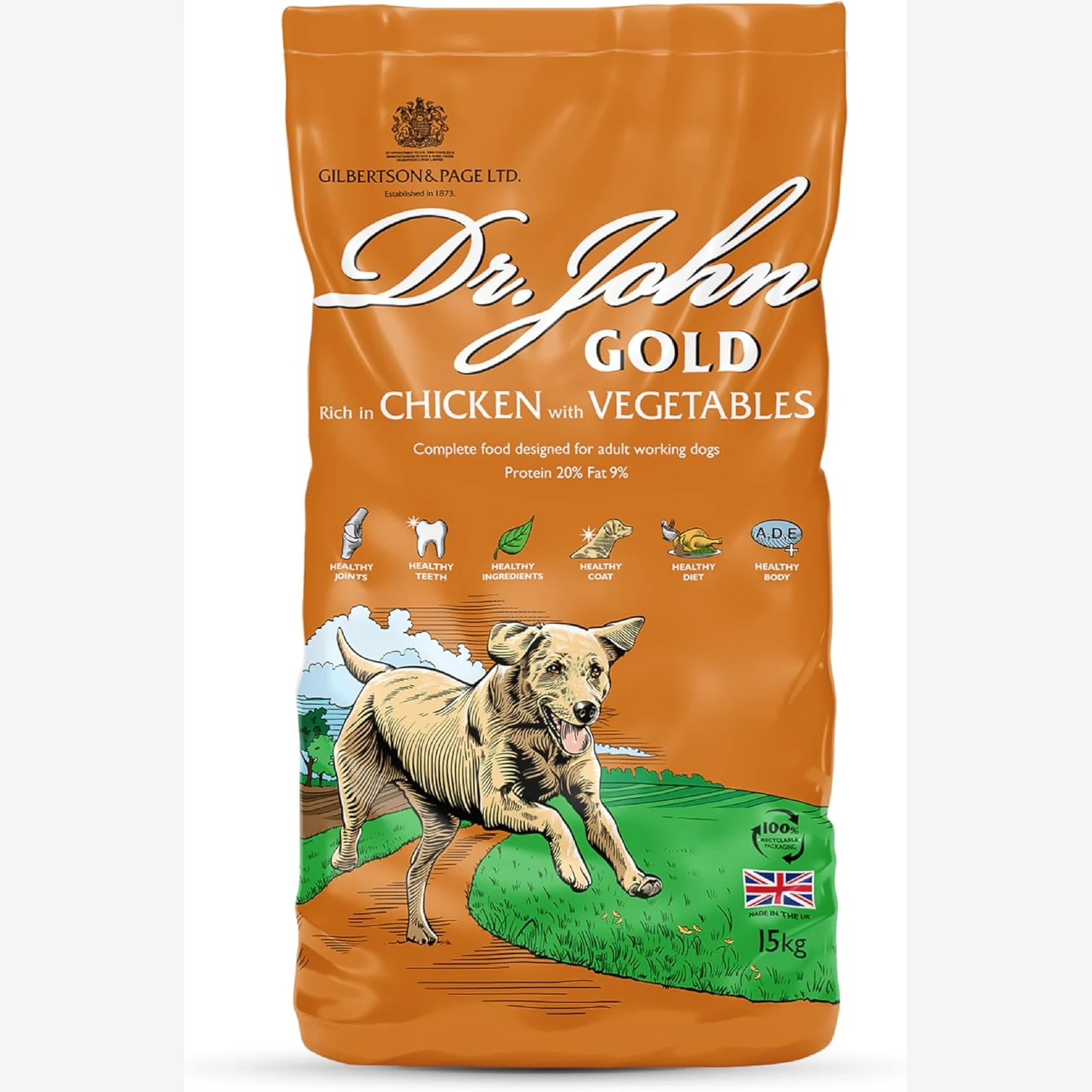
Dr John Gold, chicken with vegetables (15 kg)
Gold is the common step-up when Silver feels thin on energy but Titanium still looks excessive on paper.
Check priceWhat “maintenance” should feel like in the bowl
Maintenance means keeping condition, not building muscle for a photoshoot. You want ribs you can find without pressing hard, a waist visible from above, and a coat that lies clean. If your dog finishes meals in seconds then raids the bin, you might be underfeeding—or boredom eating might be the driver. If the collar tightens silently across a month, the scoop is probably generous.
Dr. John's Dog Food is often chosen because the per-day cost stays predictable when you multiply by large breeds or multiple animals. That practicality matters when fuel bills rise and the dog still needs the same grams regardless of your spreadsheet mood.
Activity matching: the label cannot see your diary
Feeding guides assume a statistical dog. Your spaniel might be pegging pegs three days a week or snoozing through drizzle. Adjust within sensible bounds: change grams, not brands, when workload swings are seasonal. Winter beating often needs modest increases; heatwaves may need the opposite if exercise collapses.
If your dog genuinely works hard most days, compare analytical fat on Silver against Gold or Titanium. Sometimes the right answer is not “more scoops of Silver” but a formulation that carries calories efficiently without inflating volume.
Seniors, sterilisation, and metabolic drift
Age is not a number on a passport; it is metabolism, muscle, and mobility. Some older dogs thrive on maintenance lines with smaller meals and joint support from sensible weight. Others need veterinary diets for renal, cardiac, or endocrine issues. If thirst rockets, appetite vanishes, or waist balloons while portions stayed fixed, book a clinical review before you blame the brand.
Digestive steadiness and ingredient tolerance
If stools wobble on maintenance formulas, investigate parasites, scavenging, and stress before chasing novelty. For dogs with documented sensitivity, a structured trial on lamb and rice or a grain-free recipe may be more informative than random swaps. Our ingredients primer shows how to read additives without fear-mongering.
Puppies, growth, and the wrong bag on the right shelf
Silver is not a universal puppy solution. Growth phases need life-stage appropriate nutrition. If you are raising youngsters, start at our puppy hub before borrowing adult assumptions from a well-meaning neighbour.
Retail discipline: batch notes and fair comparisons
Photograph bag fronts and lot codes when you open a sack. If palatability shifts, you will know whether imagination struck or something objective changed. Compare prices per kilogram, not per pretty picture. A heavier bag with lower protein is not automatically cheaper nutrition.
Owner chatter lives in reviews; competitive framing sits in Dr. John vs Skinners. Use both as orientation, not oracle.
When Silver is the right long-term answer
Choose maintenance when your dog’s workload is predictable, body condition is stable on weighed meals, and your vet is unconcerned clinically. Simplicity is a feature. The best feeding plan is the one you can execute honestly on a Tuesday night in the rain.
If life changes—new puppy chaos stressing the resident dog, house move, or injury—reassess portions before you reassess protein sources. Stress alters guts faster than marketing departments update bag art.
Travel and kennel stays also deserve a plan. Sudden exercise collapse followed by identical portions is a classic recipe for weight gain. Ask your boarder to weigh meals you pre-bag; ambiguity helps nobody. If your dog returns hyper-hungry, reintroduce normal routine for several days before you permanently bump grams.
Multi-dog households and the politics of feeding
If dogs share space but not metabolisms, stagger meals or supervise. The greedy dog does not need Silver “plus leftovers” from the fussy dog every night—that pattern trains obesity and resource tension. Separate bowls, timed access, and measured grams keep peace better than hoping manners appear by magic.
Cat food is not a canine supplement; it is a calorie grenade. Keep litter trays and cat bowls out of reach if your dog moonlights as a burglar.
Hydration, dental health, and the non-food layer
Kibble does not brush teeth; it contributes mechanically at best. Maintain dental checks, especially for small breeds prone to overcrowding. Fresh water should taste like water, not algae soup; scrub bowls weekly. These basics matter as much as the acronym soup on the label.
Training rewards add up. If you use pocket cheese, subtract grams from dinner. If you do not, you are not “feeding Silver faithfully”; you are running an unlogged second diet.
A kitchen whiteboard with the dog’s name, target weight, and daily grams sounds twee until it prevents six people “just topping up” the bowl.
Note: general guidance for healthy adults; clinical conditions belong to your veterinary surgeon.